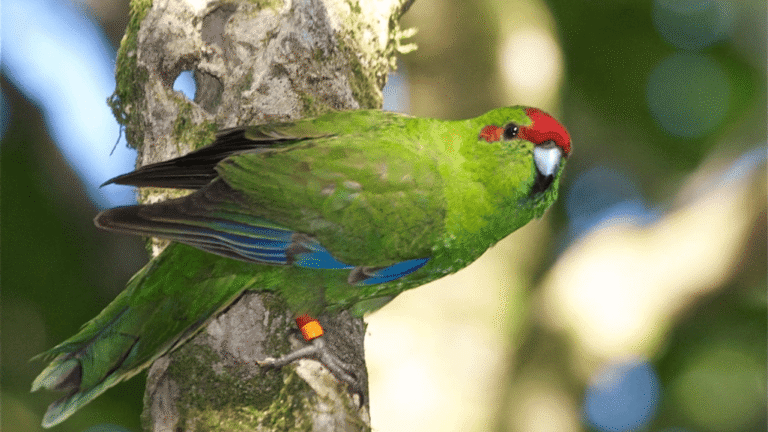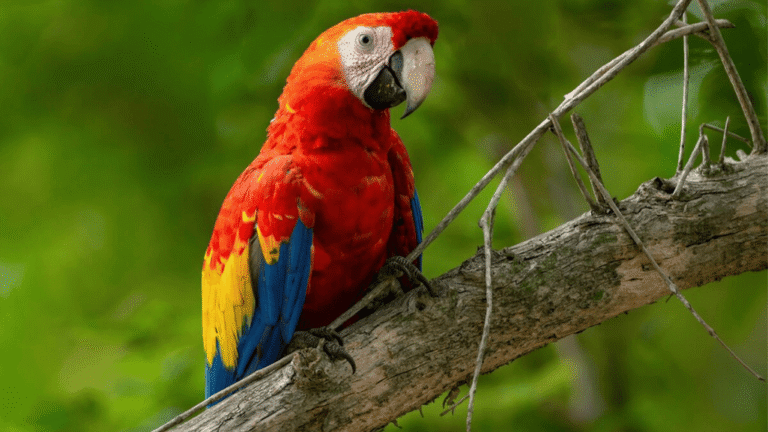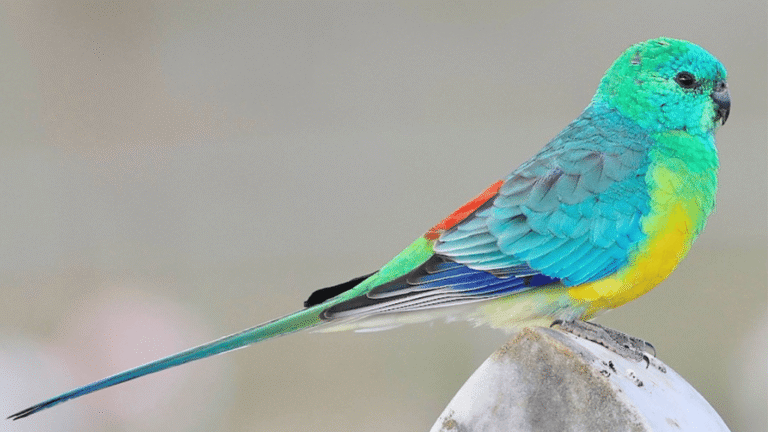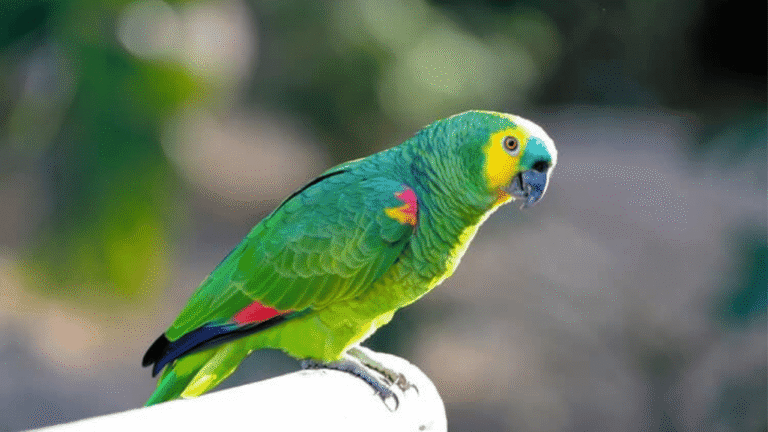
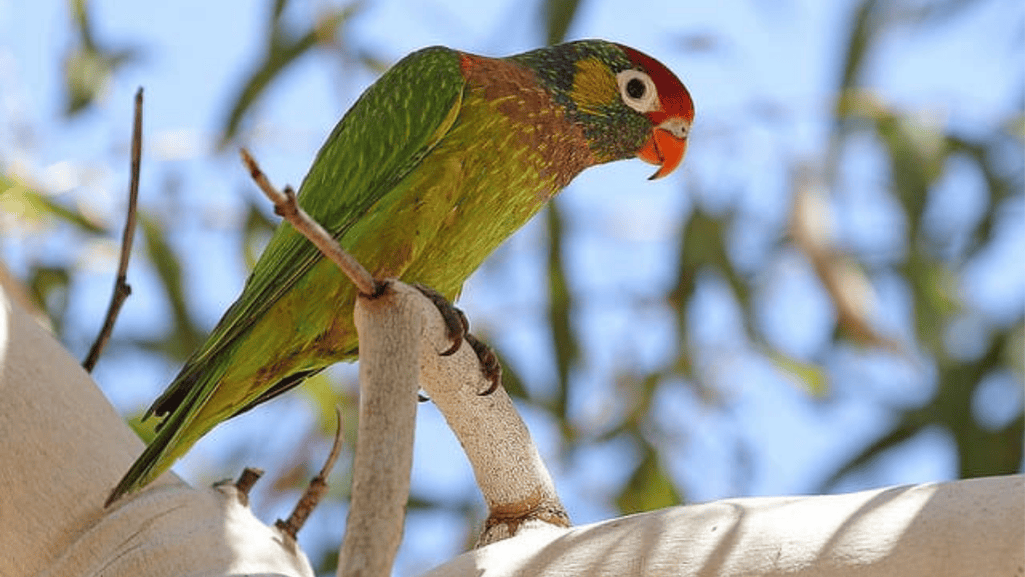

Meet the Varied Lorikeets, an eye-catching nectar-feeding member of the lorikeets group. Endemic to northern coastal Australia, this small parrot is known for fast movement, loud calls, and bold field marks that can be easier to hear than see.
Why this matters: these birds track flowering cycles and can appear in surprising places when rains or blooms shift. Though listed as Least Concern by IUCN 3.1, Least Concern doesn’t mean no threats; habitat and rainfall patterns still shape yearly sightings.
This article offers a practical, field-focused guide for U.S. readers. First we cover identification and taxonomy, then range and habitat across northern Australia. After that we explore behavior and breeding in the wild, and finish with a concise conclusion.
Key Takeaways
- Distinctive green body with red head and red beak helps field ID.
- Nectar-feeding habits link presence to flowering cycles.
- Fast, noisy behavior makes them easier to hear than spot.
- Conservation status is Least Concern but habitat shifts matter.
- Article focuses on wild ecology and recognition, not pet care.
Meet the Varied Lorikeets: A Snapshot of This Australian Lorikeet Species
For field identification, focus on the head, beak, and breast—those parts carry the clearest clues for this small parrot.
Scientific placement and family
Psitteuteles versicolor sits in the parrot family Psittaculidae and is a nectar-feeding species closely tied to eucalypt blossoms. The scientific name psitteuteles versicolor links it to other small lorikeet-type parrots in the same family.
Why “varied” and overall size
The common name refers to the multi-color pattern: fine yellow streaks on green plumage plus a red crown and red beak that stand out in short views. Length is about 19 cm (7.5 in), and the mostly green body can make the bird easy to miss amid leaves.
Head, face, and breast details
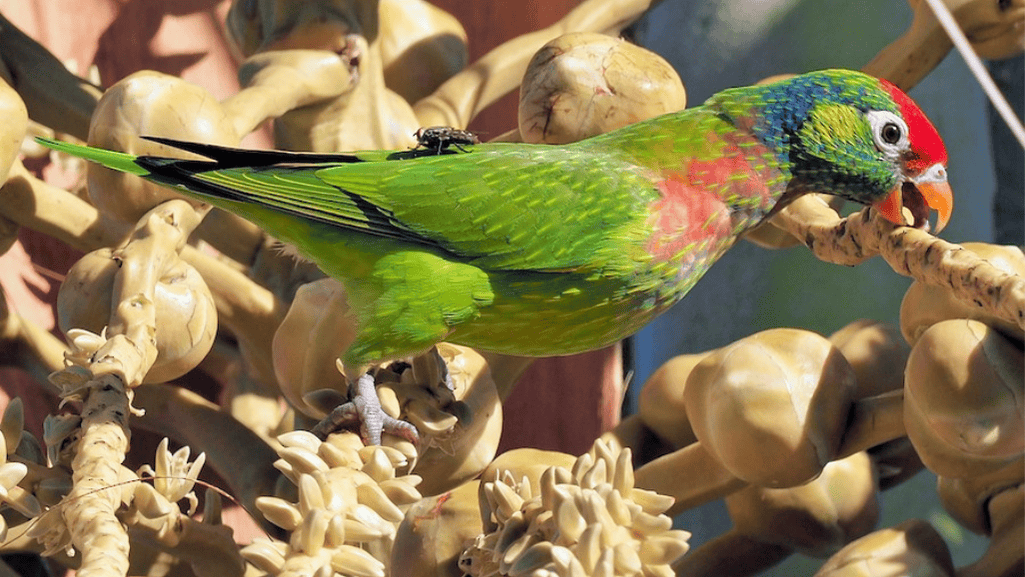
Key head marks include red lores, a red forehead and crown, a broad orbital patch, and clean white eye-rings. The beak is bright red and the irises are orange-yellow.
The upper breast is mauve with fine longitudinal yellow streaks—one of the strongest identification clues when light is favorable.
Sex, age, and naming history
Females show a less extensive red head and duller breast tones. Juveniles are overall much duller, with an orange forehead, paler irises, and a brownish beak. Early plates by Edward Lear (1831) called it Trichoglossus versicolor; Bonaparte placed the species in Psitteuteles in 1854.
- Must-check ID parts: beak color, head red extent, streaked breast, and forehead/crown pattern.
- Quick field tip: look for the mauve upper breast streaks when the bird perches in sunlit canopy.
Where Varied Lorikeets Live: Range, Areas, and Habitat in Northern Australia
The varied lorikeet ranges across northern coastal Australia, from Broome in Western Australia east through the Gulf region and into northern Queensland. Its northern limit reaches the Jardine River, and populations extend southward toward Mount Isa.
Geographic spread and recognizable anchors
Map-wise, think of a curved band across northern Western Australia, the Northern Territory, and Queensland. Key anchors—Broome, the Gulf region, Mount Isa, and the Jardine River—help make the range concrete for non-Australian readers.
Primary and secondary habitats
This species favors tropical eucalypt forests, where mass flowering creates nectar pulses. Those blooms draw the birds in large numbers.
They also use wetlands and grassland areas, moving across open country between feeding patches and mango trees in human-settled zones.
Nomadic movements and field expectations
Described as a “blossom nomad,” the lorikeet tracks flowering cycles rather than holding a tiny home range. In dry seasons, flocks may concentrate on remaining resources and appear out of their usual pattern.
Expect to hear their calls first and then spot fast flight overhead as they commute between canopy flowers.
For more detail on distribution, see the varied lorikeet entry.
Behavior, Flocks, and Breeding in the Wild
Flocks on the wing and nesting in tree hollows are central to understanding how these birds use the landscape.
Feeding and flock life
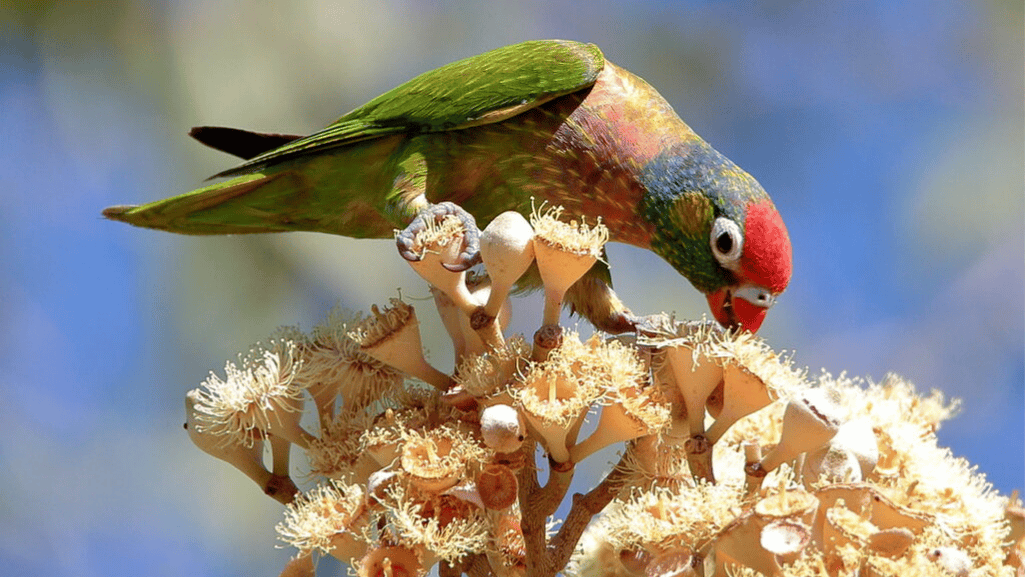
The varied lorikeet forages for nectar among flowering eucalypt branches, often clustering where blooms produce most nectar.
When blossoms are local and plentiful, large flocks form quickly and then disperse just as fast when nectar drops.
Flight and voice
Expect a swift, direct flight and a constant shrill screech that is often heard before the birds are seen.
This loud contact call helps locate moving lorikeets as they commute between feeding trees and water.
Breeding and notable behaviors
Breeding runs April–August. Pairs use unlined tree hollows, usually in horizontal limbs, and lay 2–4 white eggs.
They roost on horizontal branches and show a distinctive leaf-bathing habit: rubbing the body on rain-wet leaves after showers.
- Snapshot: fast-moving green bird flocks calling overhead.
- Ecological link: nectar dependence and flocking mirror flowering cycles for this species.
Conclusion
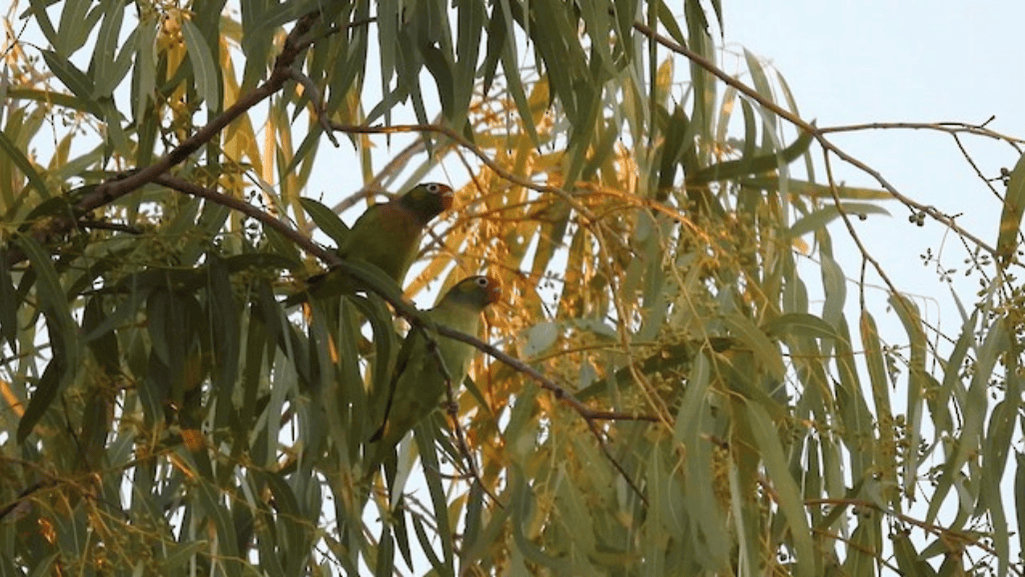 To close, focus on the clear field marks: green plumage with yellow streaking, a red crown and facial patch, and a bright red beak. These features help ID fast-moving birds in brief views.
Sightings track flowering eucalypts and seasonal rains, so location shifts with blooms. Expect loud, constant calls, energetic flock flights, and focused nectar foraging during peak blossom times.
Breeding runs April–August; pairs nest in tree hollows and lay 2–4 eggs. The species is listed as Least Concern (IUCN 3.1), but healthy eucalypt stands and old hollow-bearing trees remain vital for wild lorikeets and parrots.
If you travel to northern Australia, prioritize flowering forests and listen for flocks before scanning the canopy. For related reading on a close relative, see the rainbow lorikeet page.
FAQ
What is the scientific name and classification of this Australian parrot?
The species is classified as Psitteuteles versicolor in the parrot family Psittaculidae, a group of small to medium parrots native to Australia and nearby regions.
Why is this parrot described as “varied”?
It earns the name from distinctive field marks: yellow streaks on the breast, a red crown and forehead, and a red beak that contrast with an overall green plumage.
How large is this bird and what does it look like?
Adults are around 19 cm long with a mostly green body, a mauve upper breast streaked with yellow, and a noticeable red head patch and white eye-rings.
What differences exist between females and juveniles?
Females show duller breast tones and less extensive red on the head. Juveniles typically have an orange forehead and a browner beak until they mature.
Where does this species live across Australia?
Its geographic range spans northern Australia, including parts of Queensland, the Northern Territory, and Western Australia, favoring tropical regions.
What habitats does it prefer?
It favors tropical eucalypt forests but also uses wetlands and grassland edges, often visiting flowering trees to feed on nectar and pollen.
Are these birds nomadic or sedentary?
They show nomadic movement patterns tied to blossom and flowering cycles, shifting where large food resources are available.
How do they feed and live in flocks?
They forage for nectar and pollen in flowering eucalypt branches and form large, fast-moving flocks that travel together between feeding sites.
What is their flight like and how do they sound?
They have a swift, direct flight. Their voice is a constant shrill screech that is often heard before they are seen in trees.
When is the breeding season and how do they nest?
Breeding typically occurs April through August. Pairs lay 2–4 white eggs in unlined tree hollows, often located in horizontal limbs.
What notable natural behaviors do they show?
They commonly roost on horizontal branches, take leaf-baths on rain-wet leaves, and exhibit lively social behavior within flocks.
Are there important historical notes about its taxonomy?
Early illustrations by artists such as Edward Lear informed initial descriptions; the species is now placed in the genus Psitteuteles following modern taxonomic work.