
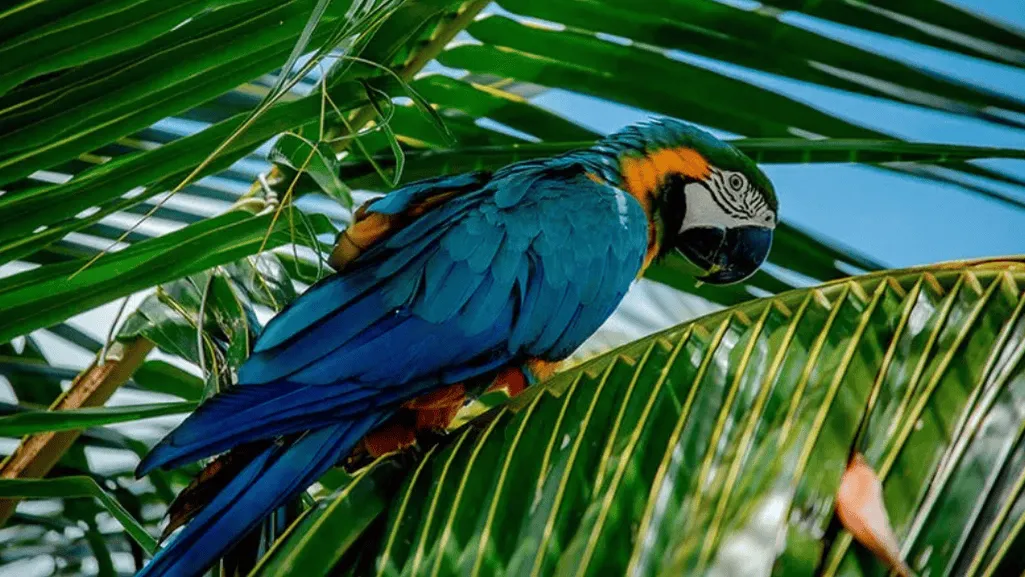

Welcome to a present-day look at some of the most striking wildlife the world offers. This piece blends science, conservation, and ethical observation to show why certain animals capture our attention now. It explains how unusual morphology, dazzling feathers, bright eyes, or a dramatic tail can set a creature apart for U.S. readers.
The goal is clear: a Exotic Bird Species list spanning continents and habitats that highlights key characteristics, behaviors, and conservation notes. Expect profiles from color-drenched tanagers and bee-eaters to ground-loving oddities and rare raptors.
Some selections are sometimes kept as pets and need special care—large ground enclosures or tall flight aviaries—or are best left to experienced keepers. Examples include the Black Palm Cockatoo and the Victoria Crowned Pigeon, while the Golden Conure faces strict regulation due to past overcapture.
Observe first, own rarely. Most readers will meet these creatures in guides, documentaries, or accredited sanctuaries. The article flags legal and ethical considerations for U.S. readers and includes measurements and field marks where helpful.
Key Takeaways
- We evaluate appeal through science, conservation, and ethics.
- Profiles cover global habitats and distinct physical traits.
- Some are kept as pets but often need specialized housing.
- Legal limits and conservation status matter—Golden Conure is regulated.
- Observation-first approach is best for most readers.
What makes a bird “exotic” today? Defining traits, habitats, and global appeal
What sets some birds apart is a mix of color, crest, bill design, and dramatic habits. Observers often call a creature unusual when its plumage, stance, or actions contrast with local wildlife. This meaning is relative; a species common in New Guinea can still seem remarkable to U.S. visitors.
Key characteristics include saturated plumage, elaborate crests, and unique bills or casques. Body shape and movement—from hovering specialists to towering silhouettes—influence how striking an animal appears.
- Color and pattern: vivid contrasts catch attention and signal mate quality or camouflage.
- Crest and bill ornaments: often used for display, combat, or communication.
- Behavioral cues: drumming, aerial hawking, and ground stalking add to the impression of rarity.
Habitats matter. Tropical forests, African wetlands, island systems, and coastal zones produce many standouts. Seasonal migration also affects sightings; some tropical bird encounters are brief or predictable by month.
Size and feet adaptations are practical signals. Measured in inches, bill shape and toe arrangement reveal perching, wading, or ground foraging niches. For responsible observation, assess plumage, crest, beak, behavior, and habitat together.
Exotic bird species you should know
Here are five standout species that illustrate range, size, and specialized care needs.
Black Palm Cockatoo — imposing crest, smoky-black feathers, and a massive beak
Black Palm Cockatoo measures about 20 inches and is one of the large birds in parrot groups. Its heavy beak and smoky plumage are unmistakable.
This parrot is intelligent but not especially affectionate. It requires expert handling, lots of enrichment, and an owner with experience.
Victoria Crowned Pigeon — French blue feathers, lacy crest with white tips, red eyes
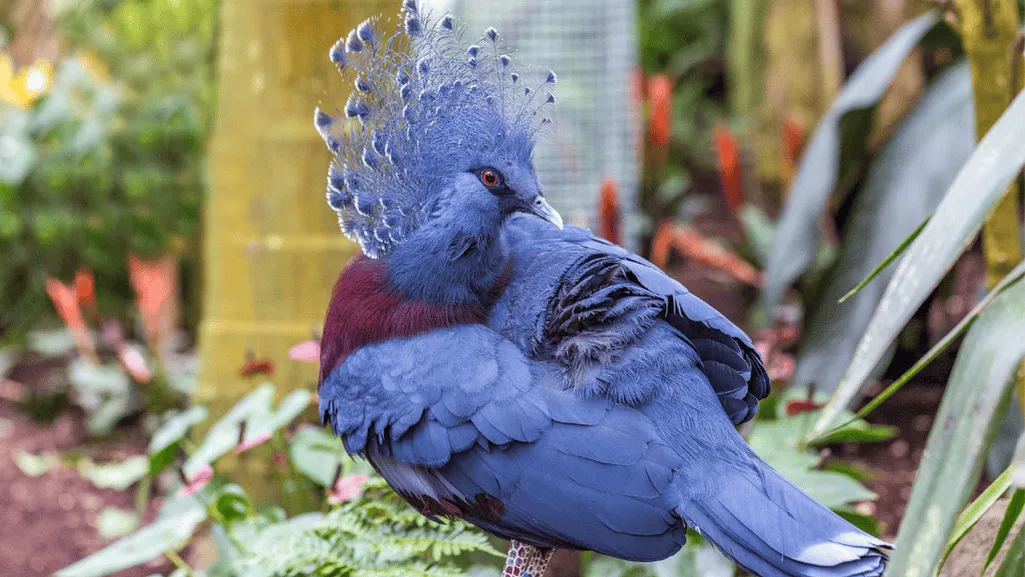
The Victoria Crowned Pigeon grows to roughly 29 inches and weighs about 5.5 pounds. Note the lacy crest with vivid white tips and striking red eyes.
This gentle ground-loving species needs expansive space to roam, not a standard cage.
Golden Conure — also known as Queen of Bavaria, radiant yellow with green flight tips
The Golden Conure, also known as the Queen of Bavaria, is about 14 inches. Its bright yellow body and green flight feather tips are showy.
Availability in the U.S. is limited due to historic overcapture and strict regulation. Prospective owners must check legal status before considering this pet.
Australian King Parrot — clear sexual dimorphism in males and females
Australian King Parrots reach 16–18 inches and grow inches into a bold presence. Males show red heads and blue underwings; females remain greener with red bellies.
Both sexes need roomy aviaries and careful socialization.
Green Aracari — compact toucan with vivid facial skin and a tricolor bill
The Green Aracari is a compact toucan around 13 inches with turquoise and red facial skin and a yellow/dark red/black bill.
Care notes: maintain constant ripe fruit, plan for messy feeding, and secure enclosure safety for active feet and perching behavior.
- Key ID cues: crest shape, beak mass, feather sheen, underwing color, and foot structure.
- Practical note for U.S. readers: some of these birds are occasionally kept as a pet but demand advanced training, time, and permits.
- Always verify welfare needs and legalities before acquisition.
Color-drenched tropical birds that captivate the eye
Vivid plumage and sharp contrasts turn some tropical residents into instant field highlights. These profiles show how color and form work in the canopy, along coasts, and in open skies.
Paradise Tanager — turquoise chest, yellow back, and inky black accents
Paradise Tanager sports a saturated palette with clean contrasts that pop against rainforest leaves. Found across much of south america, its bright mix aids mate signaling and break-up camouflage in dappled light.
Scarlet Ibis — deepening red plumage with age
The Scarlet Ibis gains richer red plumage as it matures. Mature birds are most vivid in coastal mangroves and estuaries, where their color links to diet and social displays.
Southern Carmine Bee-eater — carmine body and agile aerial hunter
This species migrates in flocks and hunts flying insects. Long, pointed wings and a streamlined body let it snatch prey on the wing with remarkable agility.
Tufted Coquette — tiny marvel with a fiery male crest
The Tufted Coquette is a small bird of northern South America. Males show a reddish-brown crest; females lack the crest, making sexual dimorphism useful for quick field ID.
“Scan river margins for bee-eaters and coastal flats for ibis colonies; patience at dawn often rewards observers.”
- Viewing tip: Keep distance to avoid flushing roosts or interrupting feeding.
- Function: Color and pattern serve signaling, mate choice, and subtle camouflage.
- Timing: Dawn and dusk bring the best light for plumage and behavior.
Striking crests, crowns, and bills: avian style statements
Crests, casques, and oversized bills act like wearable armor and stage props in the avian world. These forms evolve for courtship and conflict. They change how a head and neck read in motion.
Helmeted Hornbill
Helmeted Hornbill males use a massive casque in head-on clashes. That solid beak-like casque made “hornbill ivory” valuable to traffickers, pushing the species toward critical endangerment.
Amazonian Royal Flycatcher
The Amazonian Royal Flycatcher reveals a fan-like crown of feathers during courtship and territory displays. Quiet observation often rewards viewers with a sudden, spectacular unfurling.
Temminck’s Tragopan
Temminck’s Tragopan males show bare blue facial skin set against patterned red-orange plumage. This high-contrast signaling highlights sexual selection at work.
Kagu
The Kagu is a gray, near-flightless bird with an expressive crest and a unique nasal “horn.” Island endemism leaves it vulnerable to habitat loss and introduced predators.
- Compare casques to crests: one is weaponized, the other is a visual fan.
- Watch eye-line, feather structure, and crest deployment to ID displays.
- Support tropical forest protection to reduce trafficking and habitat loss.
Ground-loving and flight-limited oddities
When wings are seldom used, feet, neck, and head evolve in striking ways to fit life on the ground or in shallow water.
Kakapo — nocturnal, flightless parrot with a musty-sweet scent
The kakapo is a New Zealand parrot that walks and climbs instead of flying. It is nocturnal, long-lived (sometimes ~80 years), and carries a distinctive musty-sweet scent that complicates tracking and captive breeding.
Shoebill — statuesque wetland stalker with a shoe-shaped bill
The shoebill hunts from shallow swamps with a stout, shoe-like bill. Its slow, ambush stance and gray adult plumage suit a patient hunting style in Central African wetlands.
Marabou Stork — towering scavenger of African savannas and swamps
The marabou stork measures roughly 47–51 inches and weighs about 9.9–17.6 lbs. Its massive neck and head help handle large carrion, while broad wings support energy-saving flight rather than long aerial pursuits.
“Respect distance at nests and hunting sites; disturbance can harm breeding success.”
- Anatomy: reduced flight correlates with robust feet and different wing shapes.
- Habitat: shoebills and marabous favor swampy wetlands; kakapo need forest refuges.
- Ethics: observe, don’t disturb—these charismatic animals face habitat loss and human pressure.
Raptors and rare giants of the skies
Some of the largest aerial predators carry heavy ecological roles and urgent protection needs. These raptors combine size, speed, and hunting skill across tropical forests and mountain ranges.
Philippine Eagle — flagship tropical bird and conservation priority
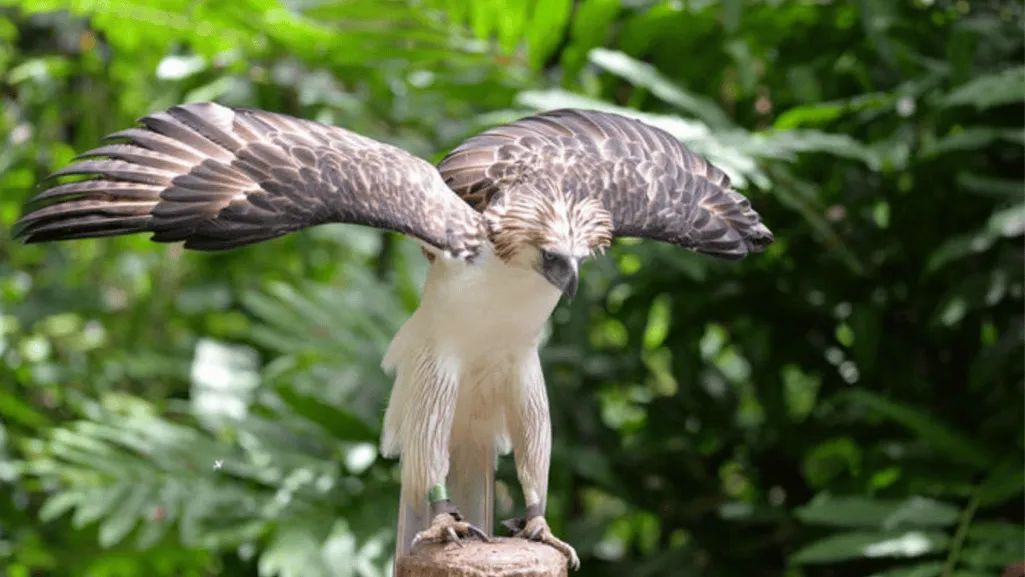
The Philippine Eagle ranks among the largest tropical eagles. Females tend to be larger than males and can take prey such as monkeys, snakes, and large birds.
With inches-scale wings and massive talons, this national symbol of the Philippines needs intact forest tracts across its countries of range to recover.
Conservation emergency: habitat protection, anti-logging enforcement, and accredited breeding programs are critical for survival.
Owls (select species) — nocturnal specialists with strict diets
Owls hunt alone and often need whole rodents daily; some species also take insects or small mammals. Their head mobility and silent flight set them apart from diurnal raptors.
For U.S. readers: possession of owls generally requires special permits and professional facilities. Ethical observation from sanctuaries and accredited centers is the responsible choice.
- Compare: eagles use powerful wings and visual strikes; owls rely on stealth and sound-muffling feathers.
- Support: consider donating to vetted NGOs that run habitat protection and captive-recovery programs.
- Note: wingspan and mass place these animals among the world’s most formidable aerial hunters.
Pet potential vs. protected wildlife: what U.S. readers should know
Deciding to keep a striking parrot or toucan starts with honest time and space estimates. These animals attract people for good reasons, but they also bring special demands for welfare, housing, and legal compliance.
Challenging companions: large parrots and toucans need space, training, and special diets
Large parrots such as the Black Palm Cockatoo are highly intelligent and need daily enrichment, firm training, and large enclosures. Without these, noise and destructive behaviors increase.
Toucans like the Green Aracari require near-constant ripe fruit, frequent cleaning, and careful safeguards to prevent accidental ingestion. They can fly quickly and may injure faces; observers sometimes use protective eyewear when handling.
Protective perches that conserve the legs and correct substrate are vital. Regular avian veterinary care and contingency plans for long lifespans are non-negotiable.
Legal realities: corvids and owls require permits or are illegal to keep
In the U.S., corvids (crows and ravens) are protected and generally illegal to keep. Owls typically require federal and state permits and specialized facilities because of whole-prey diets and solitary habits.
- Assess space, noise, and enrichment needs before any purchase.
- Plan for diet and sanitation demands — fruit-heavy menus increase husbandry time.
- Learn safe handling for strong beaks and practice bite-risk management.
- Verify federal, state, and local rules; permits may be mandatory.
- Consider alternatives: volunteer at an accredited sanctuary or support conservation groups.
“Responsible choices reduce pressure on wild populations and discourage illicit trade.”
From forests to coasts: habitats that shape exotic birds
From canopy crowns to tidal flats, habitat structure shapes where striking birds appear. Understanding that link helps U.S. travelers and naturalists plan low-impact visits that increase sighting chances.
Rainforests of South America and New Guinea
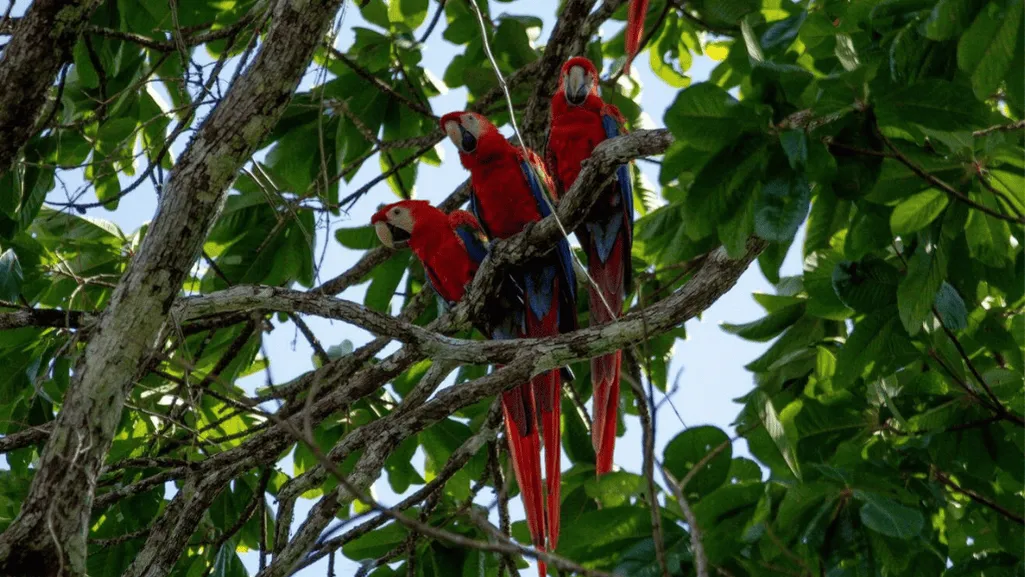
South America’s forests produce intense visual diversity. Layered canopies, rich understories, and river edges concentrate color and song. Many endemics live in narrow elevation bands, so check altitude when you search for a particular bird found in a country.
New Guinea’s mountains create isolated lineages. Steep ridgelines and mossy forest favor unique forms and odd behaviors not common elsewhere. Visiting different elevation zones often reveals entirely different communities.
African wetlands and savannas
African wetlands and grasslands support large scavengers and stalking specialists. Seasonal floods and drying cycles move prey and carrion, drawing marabous and shoebill-like hunters to concentrated feeding areas.
Open savanna also favors long legs and broad tails for balance and display. Ground and canopy niches drive foraging methods, social behavior, and tail shape across regions.
- Viewing cue: scan river edges at low water and canopy gaps at dawn.
- Timing: follow fruiting and flowering cycles to find frugivores and pollinators.
- Plan: habitat-first trips reduce disturbance and improve success.
“Protecting habitat corridors sustains migration, breeding success, and the long-term survival of these remarkable animals.”
Small birds with big personality and color
Small-bodied songsters often pack outsized personalities that surprise even seasoned watchers. These compact animals rely on bright plumage, quick moves, and bold displays to stand out in scrub, woods, or shorelines.
Red-cheeked Cordon-bleu — vivid cheek patch and turquoise body
Red-cheeked Cordon-bleu males show a bright red cheek patch that contrasts with a turquoise body. Females are duller, making sexing quick in the field.
Range: common across East and Central Africa during breeding and visible in mixed flocks outside the season. Notice feather hues shift under different light.
Eurasian Blue Tit — acrobatic insect-hunter
The Eurasian Blue Tit uses short, rounded wings and strong feet to hop and cling while harvesting insects from leaves and bark. Males often show brighter head tops than females.
Its agile tail and quick turns make it easy to spot in garden hedges and woodland edges during breeding months.
Blue-footed Booby — blue feet as a health signal
The Blue-footed Booby reaches up to about 35 inches and is a true seabird best seen on coastal rookeries and islands. The male courtship displays prominently feature vivid feet, colored by carotenoid-rich diets.
Blue feathers and eye contrasts can change with angle and light; these visual cues help mates assess condition at a glance.
Endemic wonders: island and regional standouts
Endemism arises when populations are isolated by sea or height, creating unmistakable regional signatures. Island and mountain ranges concentrate traits that tell a clear evolutionary story. These localized forms are often easiest to spot at forest edges and in subalpine clearings.
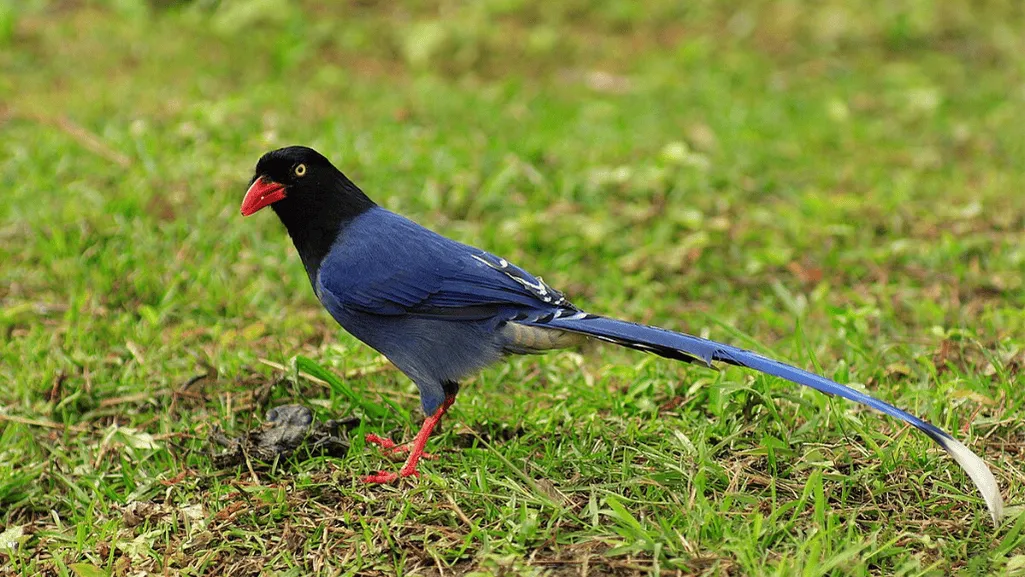
Long-tailed Blue Magpie of Taiwan
Taiwan’s long-tailed blue magpie is known for vivid blue feathers, a long tail, and a red bill and legs. Its long tail and bold body profile make identification simple even at a distance.
Pairs are monogamous and show lively display postures with raised head plumes during breeding. Look for the red bill and the sweeping tail as primary ID cues.
Himalayan Monal (Impeyan Monal)
The Himalayan Monal, also known as the Impeyan Monal, sports iridescent plumage and a rounded head shape. It is Nepal’s national bird and appears across several countries in high-elevation forests.
Males perform conspicuous displays, fanning neck feathers and raising crests. Body and tail proportions help separate it from other pheasants on alpine slopes.
- Habitat: forest edge and subalpine forests concentrate sightings.
- Field cues: head shape, tail length, and leg color are quick identifiers.
- Ethics: keep distance, avoid playback, and plan trips with local guides.
“Respect local rules and let local naturalists guide access to fragile nesting areas.”
For practical travel and low-impact viewing, consult endemic fieldwork tips from trusted sources like endemic fieldwork tips.
Pigeons reimagined: beauty and intelligence beyond city birds
Reimagining pigeons reveals large, composed forms with ornate feathers and steady temperaments. These animals range from ground-loving crowned giants to compact, metallic domestic breeds kept by experienced aviculturists.
Victoria Crowned Pigeon — gentle giant that thrives with ample space
Victoria Crowned Pigeon reaches about 29 inches and ~5.5 pounds. It shows French blue feathers, a maroon breast, a dark face mask, and striking red eyes.
The lacy crest with white tips needs headroom and ground access; these birds are gentle but not suited to small cages.
Archangels and fancy pigeons — metallic hues, crests, and calm temperaments
Archangel breeds run about 13–14 inches and ~12 ounces. They sport metallic sheen, occasional crests, and a calm temperament shaped by selective breeding since medieval times.
- Identification: crest silhouette, body proportions, and sheen in different light.
- Care notes: space, hygiene, and enrichment matter for any large pet.
- Ethics: prefer reputable breeders and avoid wild capture of protected crown forms.
“Pigeons are more diverse and elegant than many assume.”
Exotic birds with red eyes, masks, and other distinctive features
Distinct facial marks and eye color cut through forest shade and make rapid identification possible. Focus on bare facial skin and eye accents when body color looks muted under canopy light.
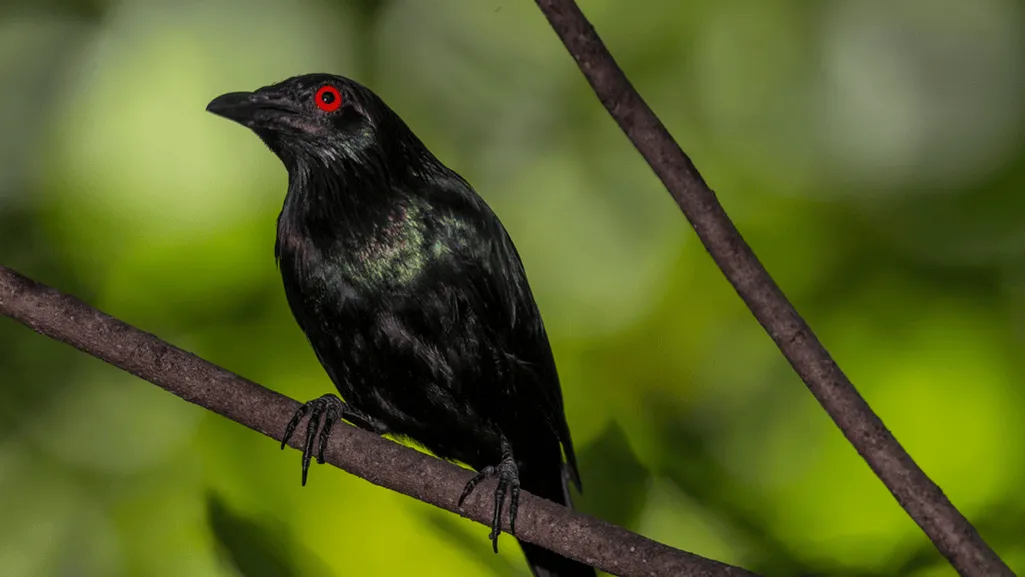
Coquerel’s Coua — red eyes with a bright blue facial mask
Coquerel’s Coua of Madagascar shows striking red eyes and a bright blue facial mask that contrast sharply with chestnut or gray plumage. The face mask is a fast ID cue in low light.
Watch tail movement: steady flicks and slow lifts help you locate this bird found in dense understory. Strong legs let it hop on trunks and leap between low branches.
Schalow’s Turaco — green body, blue-tipped wings and tail
Schalow’s Turaco displays a green body with vivid blue feathers at the wing tips and tail. Eyes outlined in white and a bold crest make the eyes pop in photos.
Diet is mainly fruit with occasional insects, so scan fruiting trees and fruiting vines at dawn or dusk. Perch preference: mid-canopy branches where short glides and hops are common.
“Minimize playback, stay on trails, and respect reserve rules to avoid flushing or stressing birds.”
Field tip: document face skin, eye rings, feather patterns, and tail shape for eBird or local checklists to aid records and conservation.
How to observe and support exotic birds responsibly
Plan time and intent before you travel so observations help conservation, not harm it. A short prep phase makes visits safer for animals and more useful to scientists and local stewards.
Choose ethical birding tours and accredited sanctuaries
Vet operators for a clear code of conduct that bans playback, baiting, and nest disturbance. Ask if guides limit group size and maintain safe viewing distances.
Prefer sanctuaries and centers that publish husbandry standards, transparent finances, and veterinary care. Note that owls and corvids usually require permits and are not lawful to keep as a pet in many places.
Support habitat conservation and species recovery efforts
Prioritize forests and protected reserves in countries managing critical habitat. Back community-based ecotourism that keeps funds local and promotes long-term stewardship.
- Give time: volunteer or fund habitat purchases and anti-trafficking programs.
- Avoid feeding: fruit or other offerings change behavior and spread disease.
- Advocate: support policies that protect migratory corridors and stop illegal trade.
“Stay on trails, respect closures, and keep distances—ethical fieldwork protects both wildlife and future sightings.”
Conclusion
Across habitats, dramatic characteristics—plumage, wings, tail, and crest—shape how the world remembers an exotic bird and its place in nature. Measurements in inches, neck and head profiles, and foot adaptations sharpen identification and deepen appreciation. Pay attention to how bills grow inches and how legs and feet support unique behaviors.
Celebrate both the tiny spectacle of a small bird like the Tufted Coquette and the gravity of a giant raptor. At home in the U.S., choose ethical sanctuaries, verify permits for parrots and raptors, and give time to local counts and field trips. Note males and females for sex-linked markings; that dimorphism tells evolutionary stories.
Conservation is the throughline: protect fruiting forests, wetlands, and coasts that sustain insects and prey. Explore South America and other hotspots with reputable guides, make memories, and support programs that keep these species thriving.
FAQ
What traits define an exotic bird today?
Which large parrots are known for red eyes or striking eye color?
Where are most color-drenched tropical birds found?
Are large, colorful birds suitable as pets in the U.S.?
How can I spot a species with a distinctive crest or crown in the field?
What are notable ground‑loving, flight‑limited birds to watch for?
Which raptors stand out among tropical giants?
How do island endemics differ from continental birds?
What safety or ethical tips should I follow when birding in tropical areas?
How can I support conservation for colorful, rare birds?








 English