
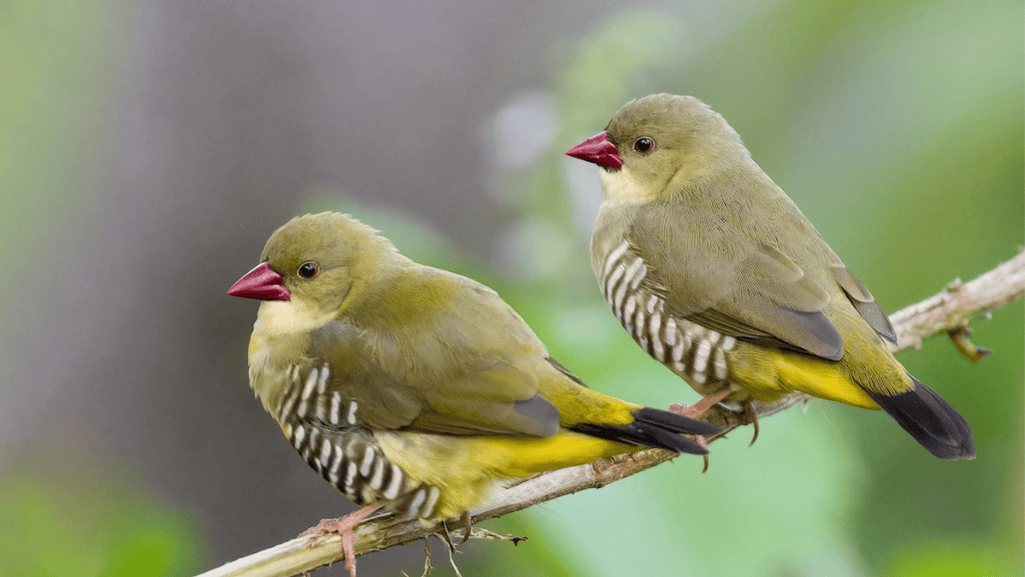

Meet the Green Avadavat Finch (also called Red Munia or Strawberry Finch): a small, colorful passerine in the Estrildid finch family noted for vivid breeding plumage and a bright, warbling song. The species’ scientific name is Amandava amandava (see taxonomic notes — sometimes referenced in older literature as Amandava formosa), and current assessments generally list it as of least concern on the IUCN Red List.
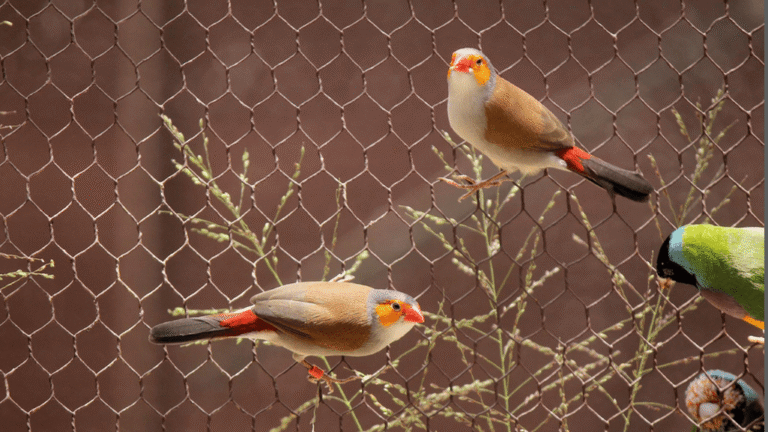
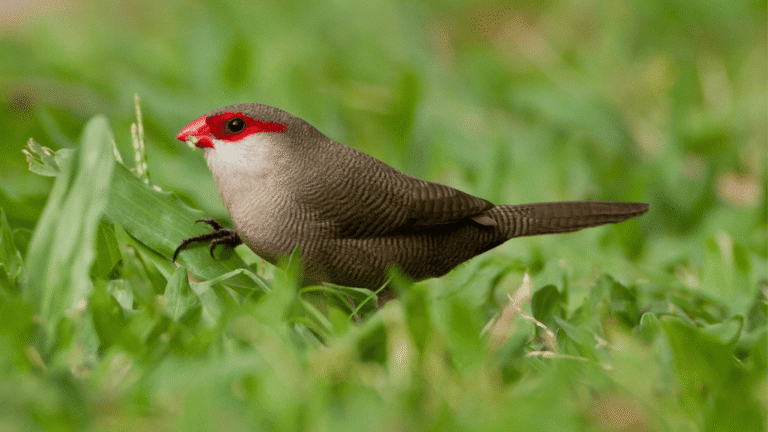
Adults show olive-green and brown plumage outside the breeding season; males develop a striking scarlet wash on the belly, flanks and underparts when breeding. Notice the short conical bill, compact body and graduated tail—key field marks for birdwatchers.
Key Takeaways:
- The Green Avadavat Finch is a small bird in the estrildid finch family, widely appreciated by birds-and-birdwatching communities.
- Non-breeding birds are olive-green and brown; breeding males show scarlet on the belly, flanks and coverts.
- Found mainly in grasslands, open fields and agricultural areas across parts of South and Southeast Asia — the name and range details vary by region and taxonomic source.
- Look for the short conical bill, compact body and a notched tail when identifying this species in the field.
- Where to spot: scan seeded grasses, millet stubble and field edges in suitable areas — excellent opportunities for birdwatchers to record observations.
Finch Breeding Habits
 The green avadavat follows typical estrildid patterns: males perform courtship displays—singing an intricate song, hopping and wing-fluttering—while showing the scarlet wash on the flanks and belly that signals readiness to breed.
- Pairing and nest site: pairs select bushy or tree sites, often at field edges; nests are cup-shaped, built from twigs, grass and feathers.
- Eggs and incubation: females lay clutches of eggs (commonly 3–5); both sexes share incubation duties—verify incubation period locally (source-dependent).
- Chick rearing: parents feed chicks a mix of seeds and occasional insects until fledging; the video timelapse above documents day-by-day nest development (useful for estimating local fledging timing).
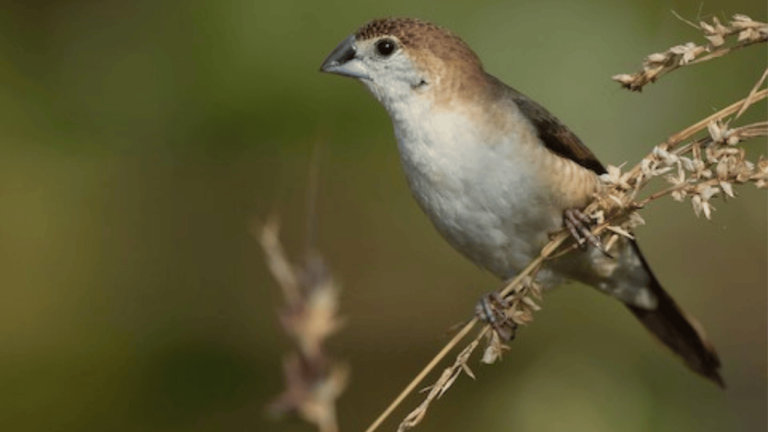
Identification tips: note the short conical bill, rounded body and the sexes—males become scarlet in the season, while females remain more olive and brown.
If you find active nests, record location and timing and consider submitting a note to a citizen-science portal (e.g., eBird) — such records improve understanding of local breeding schedules and populations. For detailed clutch, incubation and fledging durations, consult regional field guides or primary studies, as these can vary by locality.
Avian Biodiversity and Conservation Status
Avian biodiversity underpins healthy ecosystems by supporting pollination, seed dispersal and insect control; the green avadavat is one small but visible contributor to that diversity in many grassland and agricultural landscapes of South and Southeast Asia.
Currently the IUCN lists the Green Avadavat Finch as generally of “Least Concern,” but local population trends vary and merit monitoring. Regions such as parts of central India have important records of the species, and isolated occurrences (reported from places like Mount Abu and some village records) underline the need for up-to-date surveys.
The main long-term threat is loss of suitable habitat—conversion of grasslands and expansion of intensive agriculture reduce nesting and foraging areas. In some regions, bird trade and local trade in wild-caught finches have historically impacted populations, so law enforcement and community outreach remain important.
If you encounter this species, consider submitting a dated record (location and count) to a citizen-science platform—these records help researchers track range changes and inform conservation actions.
Finch Migration Patterns
 The Green Avadavat is principally a resident bird across much of its range — it does not undertake long-distance migration. That said, local movements are common: birds may shift to nearby areas in response to food availability (for example moving to harvested or recently sown fields) or changing breeding conditions.
Regional records show populations persisting in patches of suitable habitat — observers have reported sightings from locations as varied as Mount Abu to agricultural villages. Monitoring these local movements through banding and citizen-science platforms helps clarify seasonal shifts and population dynamics.
Migration Patterns of Bird Species
Understanding migration — from resident local shifts to epic transcontinental journeys — is a core part of avian research. While the Green Avadavat is not a long-distance migrant, studying other migration types (north-south, east-west, altitudinal) offers useful comparative insights into how birds navigate and respond to environmental change.
| Migration PatternsExamples | |
| North-South Migration | Migratory songbirds such as Swainson’s Thrush and Baltimore Oriole travel from their breeding grounds in North America to their wintering grounds in Central and South America. |
| East-West Migration | Bar-tailed Godwits undertake marathon flights from Alaska to New Zealand, completing an astonishing non-stop journey of over 7,000 miles. |
| Altitudinal Migration | Some species move vertically along mountains; comparing such strategies helps interpret local shifts seen in resident finches like the avadavat. |
The Significance of Birdwatching
Birdwatching (birding) is both a popular hobby and a practical conservation tool. Observers record sightings, behavior and locations—data that feed into monitoring programs and help researchers track changes in populations and distribution. Enthusiasts who spot the Green avadavat can make a real contribution: submit dated observations with counts and habitat notes to platforms like eBird to support ongoing research.
- Spotting finches and recording habitat (field edges, grass and millet stubble).
- Documenting behavioral observations and nest sites with brief notes.
- Uploading observations to citizen-science initiatives to inform conservation.
- Supporting local outreach and habitat-protection efforts based on survey results.
Finch Ornithology
Finch ornithology examines breeding, social structure, vocal behavior and evolution. For the Green Avadavat (sometimes referenced in older sources as amandava formosa), researchers have focused on courtship displays, nest construction and how plumage and coverts signal mate quality.
Field studies note differences between the sexes: males develop brighter scarlet on the flanks and belly during breeding, while females retain more subdued olive-brown tones. Observations of flock colony behavior and feeding strategies contribute to understanding their ecological role.
Key Research Areas in Finch Ornithology
- Breeding habits — courtship displays, nest materials and clutch size.
- Vocalizations — role of male song in territory and mate attraction.
- Feeding ecology — seed preferences, foraging tactics and seasonal shifts.
- Evolutionary studies — plumage signaling and genetic diversity across populations.
Well-documented body and plumage notes, combined with organized citizen data, strengthen conservation planning—encouraging more observers to log sightings improves knowledge of distribution and local trends.
Finch Species Habitat
The green avadavat thrives in open, seed-rich landscapes: dry grasslands, field margins and agricultural areas where grass seeds, millets and small grains are abundant. Their short, conical bill is adapted to cracking seeds, while a compact body and notched tail make them agile among stems and grasses.
These finches also use disturbed and semi-urban habitats, including gardens and roadside grass patches. Their flexibility helps populations persist where natural grasslands have been altered, provided there are suitable nesting sites and seed resources nearby.
Successful habitat requires three basics: suitable nests and nesting cover, abundant seed food, and vegetation that offers shelter from predators and weather. Nests are typically built low in bushes or tall grasses using twigs, grass and feathers.
Key Habitat Factors
- Suitable nesting sites (low bushes, tall grass clumps).
- Abundant seed sources—grass seeds, millets and small grains.
- Vegetation cover for shelter and predator avoidance.
- Conservation measures: preserve grassland patches and adopt sustainable land-use.
Local case notes suggest the species can persist in agricultural villages where field margins and fallow grassland remain—documenting such occurrences (for example village sightings in parts of central India) helps target habitat-restoration work.
Conservation takeaway: protect and restore grassy field edges and low shrub cover, and encourage farming practices that retain seed-bearing plants—simple steps that support habitats for the Green munia and other grassland-dependent species.
Finch Conservation Efforts
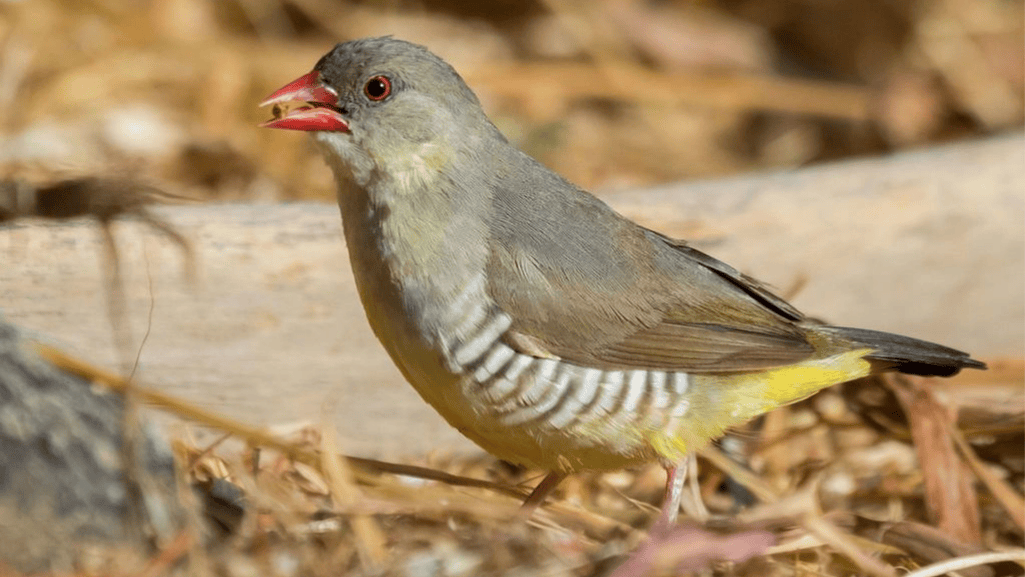 Conservation groups, researchers and local communities work together to reduce threats to the Green Avadavat Finch. Key approaches combine on-the-ground habitat actions with awareness, enforcement and science so that populations remain stable and resilient.
What conservation does
- Habitat restoration — re-establishing grassy margins and fallows to provide nesting and seed resources.
- Habitat protection — creating or maintaining protected patches within agricultural landscapes.
- Public awareness — educating farmers and communities about the value of grassy field edges for birds.
- Research and monitoring — tracking numbers and breeding success to guide action.
- Law enforcement — addressing illegal capture and the bird trade where it occurs.
Collaborative projects — linking scientists, NGOs and villagers — have particular promise: community-led restoration of field margins both provides habitat and supports livelihoods.
How you can help
- Report sightings and breeding notes (dates, counts, location) to citizen-science portals to improve population knowledge.
- Support or volunteer with local habitat-restoration initiatives.
- If you encounter illegal capture or sale, report it to local wildlife authorities—combating the trade protects wild populations.
Research, education and community action together create the best chance for long-term conservation of the Green Avadavat Finch and other grassland-dependent species.
Conclusion
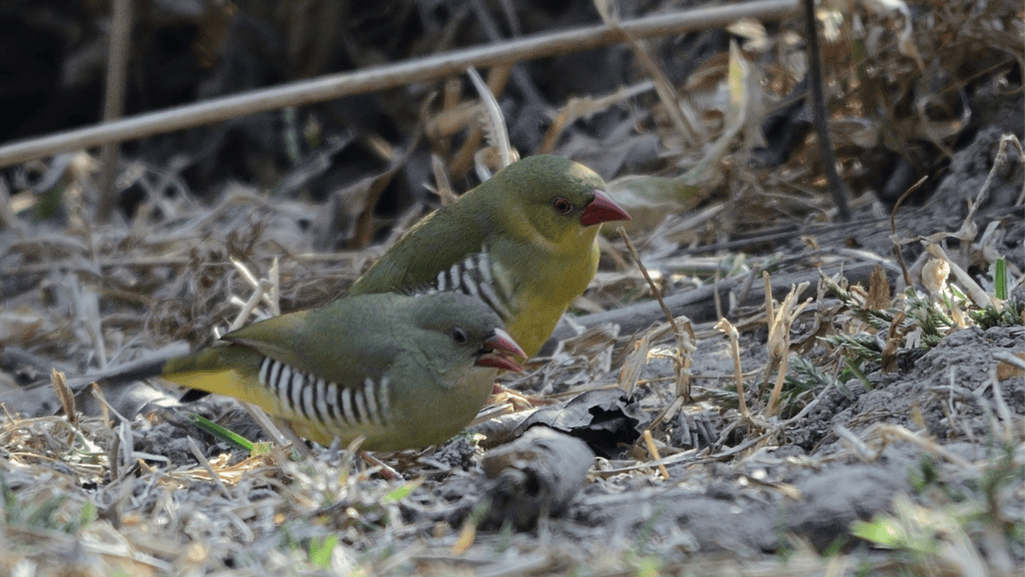 The Green Avadavat Finch combines striking breeding plumage with adaptable habits, making it both a favorite of birdwatchers and a useful indicator of grassland ecosystem health. Although the species is generally assessed as Least Concern, continued loss of grassy nesting and foraging habitats could alter local populations.
To help safeguard the species: report dated sightings and breeding records (location, count, habitat) to citizen-science platforms, support habitat-friendly land use, and report any illegal capture or sale to authorities to reduce pressure from the bird trade.
Small actions by birders, researchers, land managers and communities together secure the future of the Green Avadavat and the grassland birds that depend on these habitats.
FAQ
What is the Green Avadavat Finch?
Where is it found?
What are its breeding basics?
What does it eat?
Is it migratory?
How can I help?


 English