 Skip to content
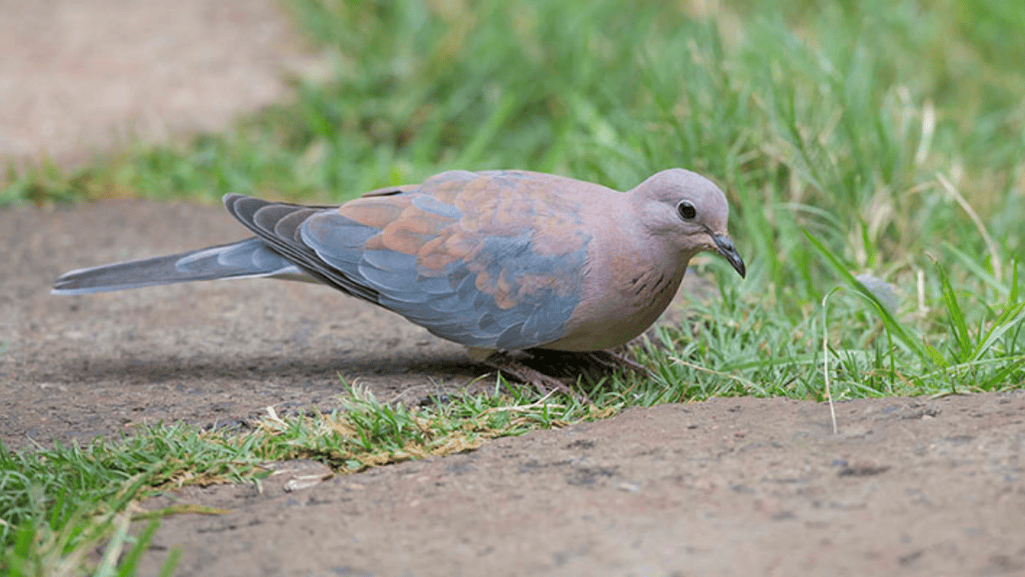

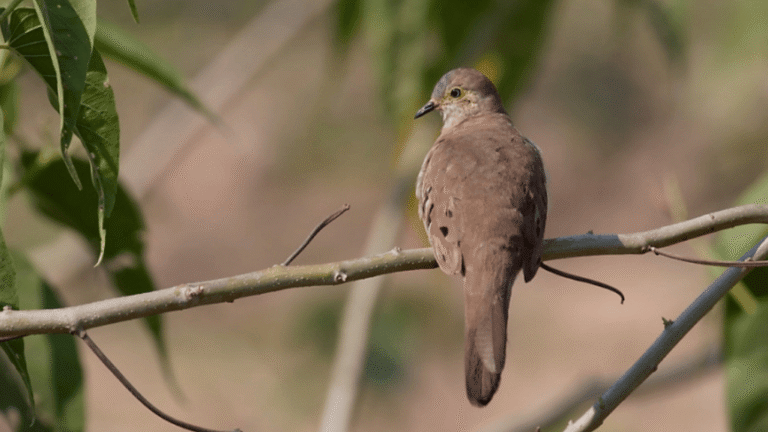
The laughing dove is a small, long-tailed pigeon-like bird many people notice first by sound rather than sight.
The species name Spilopelia senegalensis places it in the pigeon family, which explains familiar habits like ground foraging and a strong, direct flight.
Found across Africa, the Middle East, and South Asia, with introduced populations in Western Australia, this dove has a broad range and a resilient life pattern.
Conservation status: the IUCN lists it as Least Concern, though local pressures can affect daily survival and nesting success.
In the sections ahead, expect clear coverage of classification and name origins, behavior and diet, habitat and range, plus nesting and raising young. We’ll highlight the signature chuckling call, strong pair bonds, and busy breeding rhythm that make this bird so intriguing to watch.
Key Takeaways
- This small pigeon-like bird is often recognized by its chuckling call.
- Scientific name: Spilopelia senegalensis; it is a member of Columbidae.
- Native range: Africa, the Middle East, and South Asia; introduced in Western Australia.
- IUCN status is Least Concern, but local threats can influence populations.
- Later sections will cover identification, behavior, habitat, and nesting.
Meet the Laughing Dove: Name, Species, and How It’s Classified
Many people recognize this small bird by sound before sight. Its formal identity is Spilopelia senegalensis, which places it in Order Columbiformes and Family Columbidae. That grouping links it with other pigeons and similar ground-feeding species.
Scientific name and family placement
The binomial Spilopelia senegalensis (Linnaeus, 1766) reflects current taxonomy. Older texts may list synonyms like Columba, Streptopelia, or Stigmatopelia, so check labels when consulting older guides.
Common names and the origin of its call
The common name comes from a bubbly, chuckling call that people liken to gentle laughter. Alternate names include laughing turtle dove, palm dove, Senegal dove, and the regional “little brown dove.”
Subspecies and why taxonomy changed
A 2001 molecular study showed previous groupings were incomplete, so the genus Spilopelia was reinstated. Recognized subspecies include phoenicophila, aegyptiaca, senegalensis, cambayensis, and ermanni. These reflect minor regional differences but not major behavioral change.
Conservation status: Listed as Least Concern, this species remains widespread, though local pressures can affect numbers.
Laughing Dove Behavior and Daily Life in the Wild
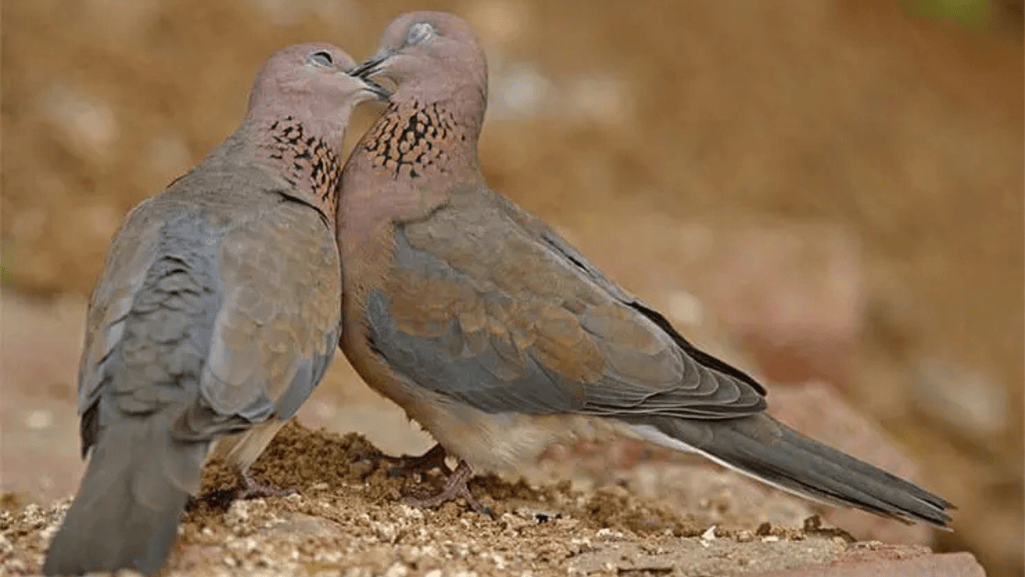
In arid yards and scrub, these small pigeons stick close to one another and to reliable water. You will most often see them in pairs or as tiny parties at a source of food.
Social setup and long-term pairing
Pairs keep tight spacing while feeding and resting. A lifelong pair means partners forage together, defend a shared area during breeding, and call back and forth to stay connected.
Feeding on the ground
They walk slowly rather than hop, scanning bare soil and leaf litter for fallen grass seeds. When available, they also pick up insects such as termites and beetles.
Flight, call, and common threats
Flight is quick and direct, with steady beats and the occasional sharp wing flick. The typical call is a low rolling, rising and falling “croo-doo-doo-doo-doo” used to keep contact and strengthen bonds.
“You’ll often notice tight pair spacing on the ground, sudden takeoffs, and repeated calls from low perches.”
- Typical predators documented include shrikes in India and lizard buzzards in Africa.
- At waterholes, larger groups can form as multiple pairs gather.
Where Laughing Doves Live: Range, Habitat, and Western Australia’s Introduced Populations
This species is widely distributed. It ranges across Sub-Saharan Africa, stretches through the Middle East, and reaches into South Asia, including Pakistan and India.
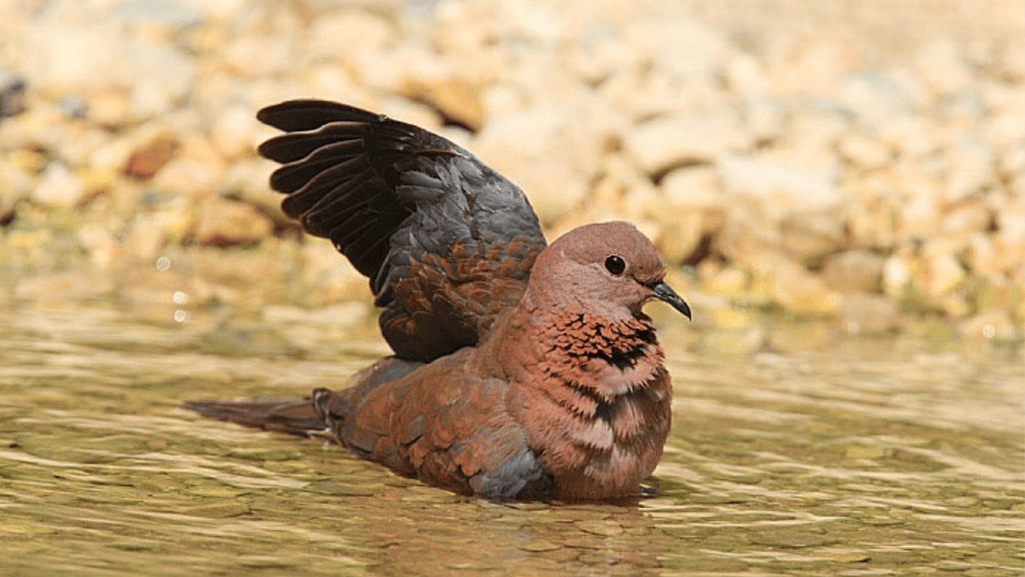
Preferred habitats are open and disturbed areas. You’ll often see them in dry scrub, semi-desert edges, and dry farmland. Gardens and settlements with spilled seed and weedy grasses also attract these birds.
Their success comes from flexibility. They use disturbed habitats well and live near people when food and water are available. That tameness makes them easy to observe at homes and farms.
Western Australia: a short history
Introductions near Perth in the late 1800s led to wild populations. Notably, releases from Perth Zoo in 1898 helped establish the species in Western Australia.
- Native distribution: Sub-Saharan Africa, the Middle East, and into South Asia.
- Habitat specifics: dry scrub, cultivated fields, gardens, and human settlements.
- Introduced means living outside its native range; these populations show how adaptable the species can be.
For more details on behavior and identification, see this concise guide at the laughing dove profile. Observers in the United States may find the species’ adaptability useful as an example of how birds respond to human-altered landscapes.
Breeding, Nesting, and Raising Young: From Twigs to Eggs
When breeding season arrives, pairs shift into a rhythm of displays, twig delivery, and close cooperation.
Courtship and pair coordination
The male begins by following a potential mate with head-bobbing and soft coos. He may preen near her and offer small food items in courtship feeding.
Display flights can include a quick wing clap above the back followed by a glide. Partners keep close, call often, and swap nest duties to protect eggs.
Building the nest
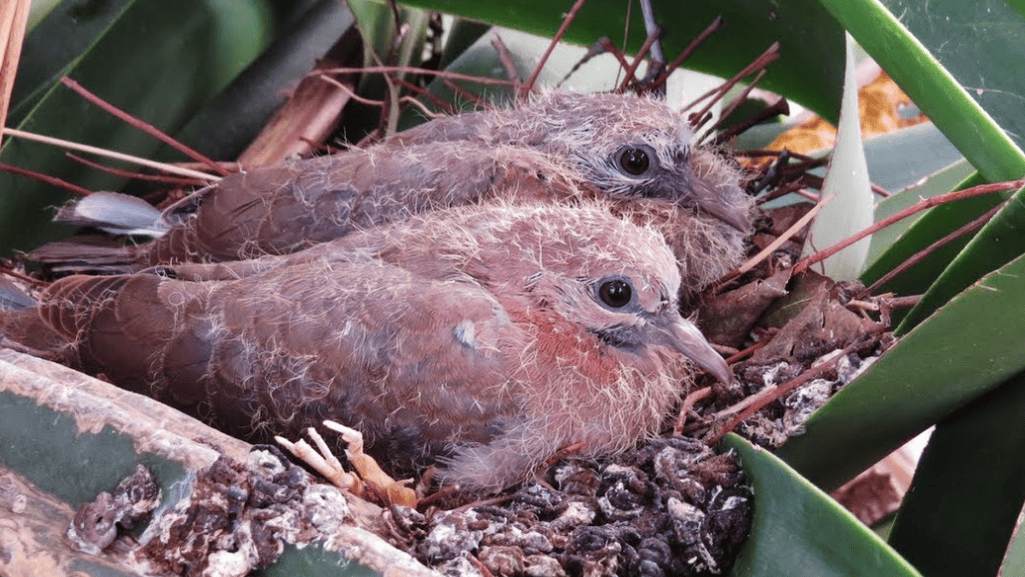
The nest is a shallow, flimsy platform made from twigs. The male gathers twigs and delivers them to the site.
The female places and shapes the nest, using her breast to press and form the shallow cup.
Eggs and incubation
A typical clutch has two eggs laid about a day apart. Incubation usually begins after the second egg is laid.
Both adults share incubation duties, often splitting daytime and nighttime shifts. Hatch occurs in about 13–15 days.
Chick care and fledging
Hatchlings are altricial and depend on regurgitated crop milk from both parents. Young grow quickly and fledge around 14–16 days.
Multiple broods and nest defense
Pairs can raise several broods a year when conditions are good; up to seven broods have been recorded in some regions. Adults may feign injury to distract predators and protect the nest.
Brood parasitism is rare but recorded: the Jacobin cuckoo sometimes lays an egg in local nests.
- Quick guide: 2 eggs → 13–15 days incubation → fledge at 14–16 days.
- Roles: male brings twigs; female shapes the nest.
- For a concise species overview see the laughing dove profile.
Conclusion
A soft, rolling call and a slim, long tail are the easiest 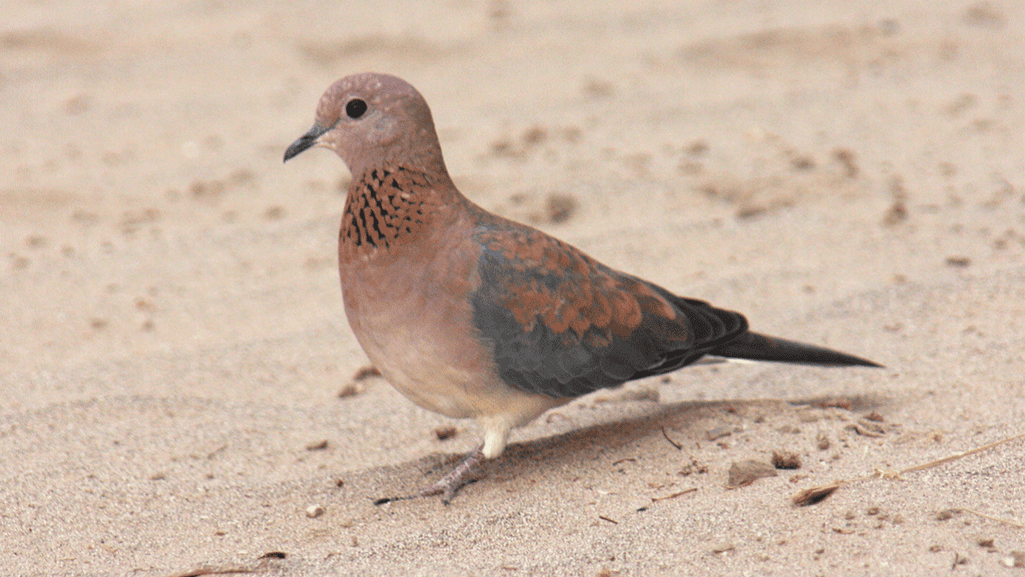 features to remember when identifying this bird. Its habit of foraging on open ground near people also helps it stand out.
This dove fits the familiar pigeon-and-dove blueprint yet thrives across wide habitats. Pairs stay close, form stable bonds, and show small-group social patterns that make them easy to watch.
Breeding is cooperative: a coordinated pair builds a twig nest, shares incubation of two eggs, and feeds young with crop milk until fledging. Overall status is Least Concern, but local populations can shift with predators, habitat change, and urban pressure.
For a concise field note and extra context, see this community guide. Listen for the call and watch calm doves moving together—it’s the fastest way to confirm this species in everyday life.
FAQ
What is the scientific name of this species and how is it classified?
Why does this bird have its common name and are there other names used?
Are there subspecies and has its taxonomy changed over time?
Do these birds form long-term pairs or only temporary bonds?
What do they eat and where do they forage?
How do they fly and move across dry landscapes?
What does their call sound like and what does it communicate?
What predators or threats commonly affect them?
Where are they naturally found and what is their native range?
What habitats do they prefer and will they live near humans?
How did populations become established in Western Australia?
How do courtship and bonding take place between mates?
Who builds the nest and what materials do they use?
How many eggs are laid and what is the incubation schedule?
How are chicks fed and when do they fledge?
Do these birds raise multiple broods and defend nests aggressively?





 English